


多巴反应性肌张力不全(DRD, 又称Segawa病),属于神经传导物质病变, 是累及神经系统的罕见疾病。儿童时期往往以步态异常为首发症状,给予小剂量左旋多巴症状可好转。遗传方式多为常染色体显性遗传,三磷酸鸟苷环化水解酶1(GCH1)基因是DRD的致病基因(GCH1基因突变也可以表现为常染色体隐性遗传),其他基因例如酪氨酸羟化酶 (TH)、 墨蝶呤还原酶(SPR)突变则表现为常染色体隐性遗传。本文报道1例DRD,基因测序显示其存在GCH1基因突变,具体如下。
病例资料
一、一般情况
患儿女,8岁4个月,因步态异常8月余于2019年7月30日入住澳门镜湖医院儿科。患儿缓慢起病,无明显诱因下于行走时出现肌张力不全姿势,表现为右下肢屈曲内翻,伴右上肢僵硬,晨轻暮重,经晚上休息后早上好转,无伴头痛、抽搐。患儿出生史正常,既往史无特殊, 自幼运动、语言发育正常,智力正常,学习成绩可。其父亲有轻微步态异常10余年,未予重视,此前未曾就诊,其母亲身体健康。
二、体格检查、实验室及辅助检查
体格检查:发育正常,无特殊面容及皮肤胎记,心、肺、腹无特殊,颅神经检查无特殊,四肢各关节未见畸形,脊柱未见异常,肌容积正常,四肢肌力Ⅴ级,四肢肌张力正常,生理反射正常,右侧髁阵挛阳性,病理反射未引出,脑膜刺激征阴性,共济试验完成准确。实验室及辅助检查:外周血常规正常,ESR不高,肝肾功能、心肌酶、电解质及血气分析正常,催乳素正常,铜蓝蛋白正常,血氨、乳酸不高,RF、抗核抗体、抗双链DNA及抗O均阴性,血串联质谱氨基酸及肉碱谱正常,尿气相色谱有机酸正常。双下肢立位X线片检查未见异常。颅脑及脊髓MRI平扫及增强未见异常。上下肢神经运动感觉传导速度检测正常。
三、诊治经过
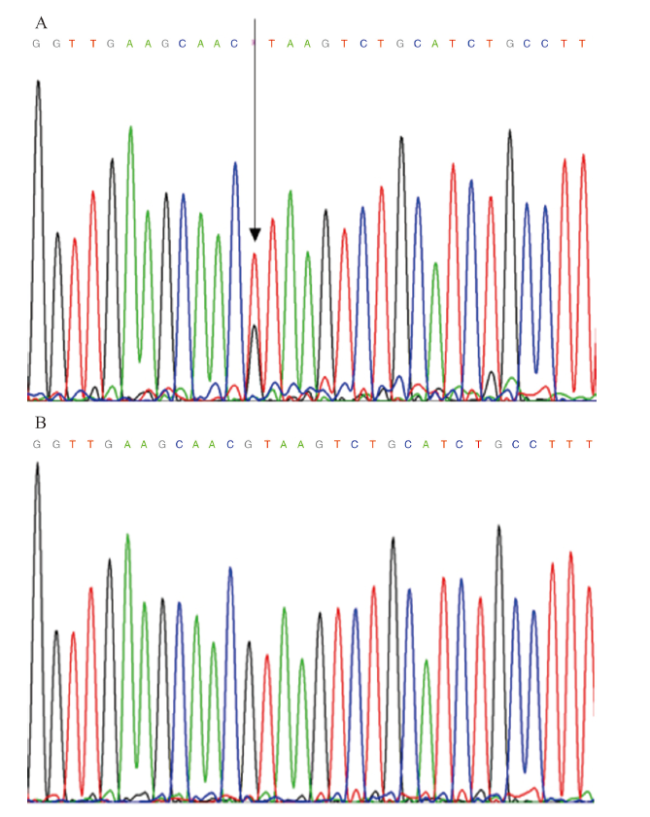
根据患儿临床表现高度怀疑DRD,予其小剂量左旋多巴作诊断性治疗,剂量为40 mg/d[相当于1.5 mg/(kg·d)],治疗1周后患儿症状好转,2019年8月基因外显子测序+Sanger测序提示GCH1基因杂合性剪接位点突变c.626 + 1G>T,其父亲有同样的突变而母亲没有,见图1。患儿诊断DRD明确,嘱其长期服用左旋多巴及在小儿神经科门诊接受长期随诊,随诊2年余时其神经系统体征基本消失,运动功能良好,病情稳定。


讨论
DRD于1976年由Segawa首次描述,故又称为Segawa病[1]。其临床表现多样,主要表现为肌张力不全及帕金森样症状,以晨轻暮重现象、小剂量多巴治疗有显著且持续的疗效为特点[2]。文献报导部分病例可出现不典型症状,例如新生儿期起病、严重运动障碍(吸吮、吞咽困难,严重肌张力低下,眼睑下垂,抽搐,智能倒退,疲乏,激惹,反复体温过低等),被称为DRD-plus[3]。本例DRD的诊断依据如下:①学龄期女性,缓慢起病;②行走时可见肌张力不全姿势,晨轻暮重;③右侧髁阵挛阳性;④其父亲有轻微步态异常;⑤小剂量左旋多巴治疗有明显效果;⑥患儿及其父亲基因检测结果均为GCH1 基因杂合性剪接位点突变 c.626 + 1G > T。
DRD的遗传方式多为常染色体显性遗传或隐性遗传, 隐性遗传患者症状较显性者严重。除了GCH1之外,其他基因如TH、SPR突变也可致DRD或DRD-plus[4,5]。相同的基因突变可有临床表型异质性,症状的严重程度与突变的数量、酶活性减少的程度有关。本例患儿GCH1基因突变 c.626 + 1G > T,为杂合性突变, 该基因为剪接位点(+1)突变, 发生功能缺失, 是导致DRD的致病因素, 正常人携带频率为0, 有权威的研究和数据库支持该突变是致病的, 且多项计算机模拟计算预测此剪接位点突变为有害的影响, 根据美国医学遗传学与基因组学学会指南,判定该突变位点为致病性突变(PSV1+PM2+PP5+PP3)。GCH1基因突变典型表现为年轻患者、以下肢肌张力不全为首发症状、无明显认知功能受累等,本例患儿临床表现和文献报导相符[6]。
DRD容易被误诊漏诊,部分患者起病至获得诊断的时间可长达十余年[12]。如患者未能获得适当治疗,基底节长期缺乏多巴胺会致调节运动功能出现混乱,DRD的肌张力不全及帕金森样症状渐渐加重,对左旋多巴的治疗最终不再有反应。故临床医师应提高对DRD的认识水平,及早实施诊断与治疗,这将对此病患儿的预后有很大帮助,可有效预防残疾的发生。